

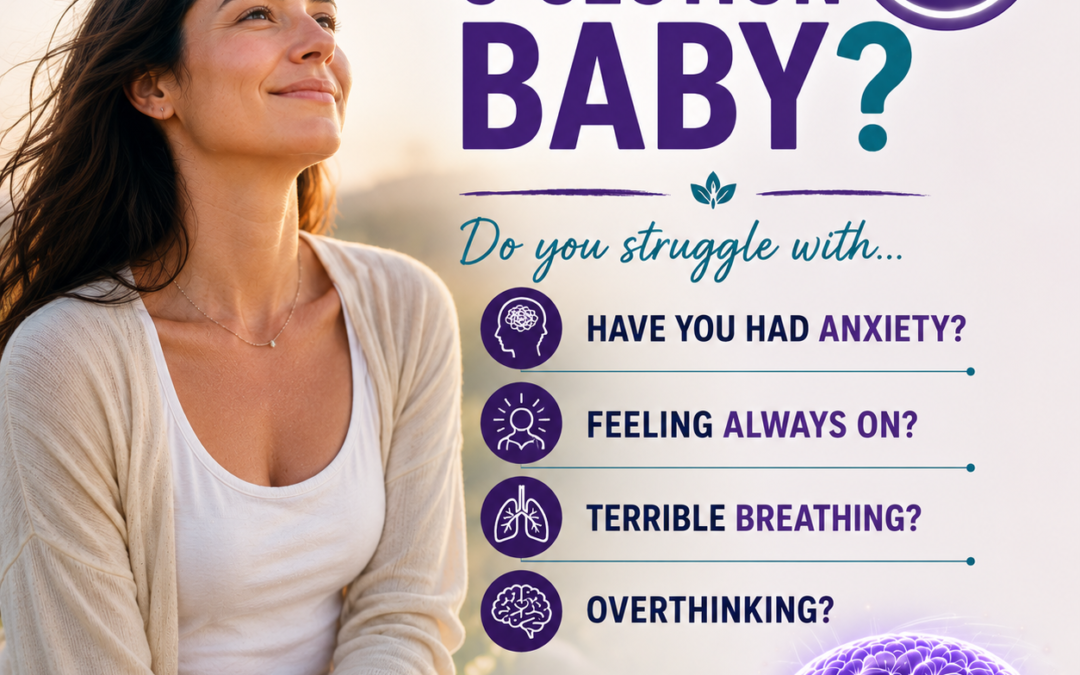
One of the first experiences your central nervous system has is birth.
During a vaginal delivery, a baby is gradually compressed while moving through the birth canal. This natural process places gentle pressure on the head, rib cage, lungs, diaphragm, and pelvis. It also exposes the baby to changing touch, pressure, sound, movement, and light as they transition from the womb to the outside world.
These mechanical and sensory inputs may help prepare the baby’s nervous system (breathing mechanism) for its new environment and support the transition to independent breathing after birth.
With a Cesarean birth, that mechanical journey is different. A C-section is often medically necessary and life-saving, but the nervous system receives a different sequence of sensory and mechanical input. This doesn’t mean something is “wrong”—it simply means the body may benefit from learning or relearning some of those patterns later in life.
What I Often See Clinically
Over the years, I’ve noticed that many clients who were born by C-section often present with patterns such as:
- Upper chest breathing
- Difficulty expanding the ribs and abdomen with a full 360° breath
- Faster breathing rates
- Difficulty relaxing into quiet breathing
- Feeling “always on”
- Restlessness or difficulty sitting still
- A preference for sleeping on the stomach
- Limited diaphragm movement
- Protective movement patterns
-
Anxiety
These observations are not true for everyone, but they appear often enough that I ask about birth history during an assessment.
Restoring the Pattern
One client laughed when I asked if she had been born by C-section and if she preferred sleeping on her stomach. She was surprised that both were true.
During her assessment, she demonstrated:
- Limited 360° abdominal breathing
- A tendency to hyperventilate by taking too many breaths per minute
- Limited spinal and rib movement
- Reduced range of motion
Rather than treating symptoms, we focused on giving her nervous system better input.
After restoring motion between the sphenoid and sacrum, performing diaphragm resets, and improving rib movement, her breathing naturally became deeper and quieter.
By the end of the session, she had:
- A longer, slower breathing pattern
- Her tongue naturally resting on the roof of her mouth
- Improved range of motion
- A calmer nervous system
- Better gait mechanics
- A greater sense of safety and ease
Why This Matters
Many people don’t realize they’re living with a nervous system that has been operating in protection mode for years.
They don’t necessarily describe themselves as anxious.
Instead, they say things like:
- “I can’t sit still.”
- “I always have to stay busy.”
- “Silence makes me uncomfortable.”
- “I always feel like I should be doing something.”
Sometimes these patterns aren’t simply personality traits—they may reflect a nervous system that has never fully learned what safety feels like.
The exciting part is that the nervous system can learn at any age.
By providing the right sensory and mechanical input, you can teach the brain and body new patterns that support better breathing, improved movement, greater resilience, and a deeper sense of calm.
Assess. Reset. Reassess.
Small changes in the right input can create remarkable changes in the output.