

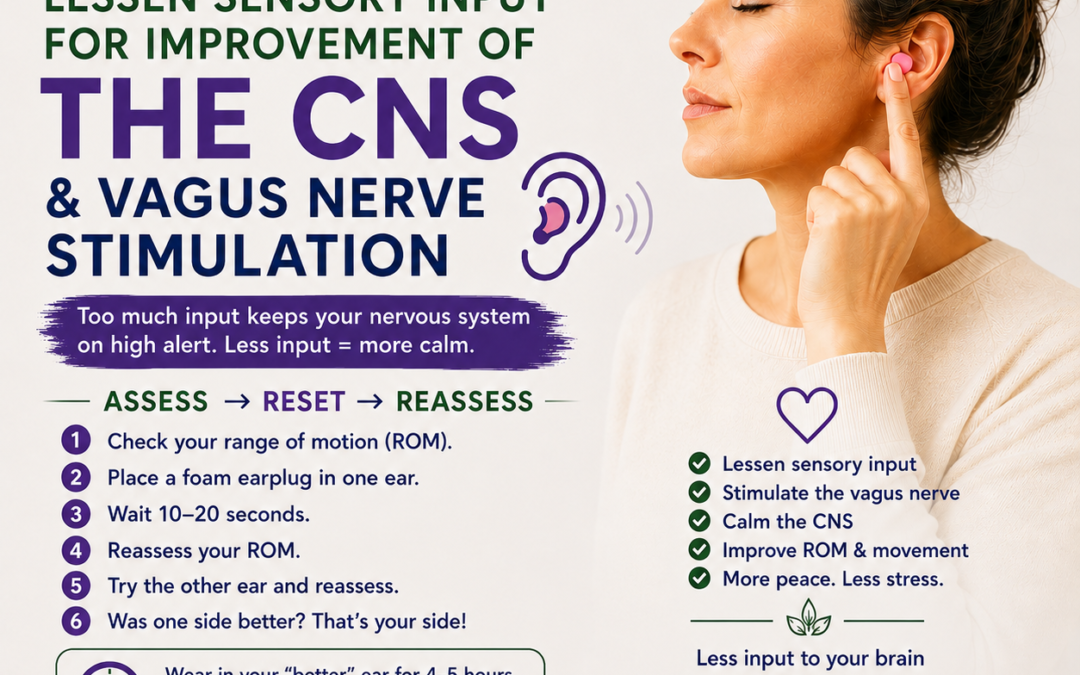
Changing Sensory Input to Calm the Nervous System
Your ears are constantly sending information to your brain. In some people, reducing sensory input from one ear may temporarily change how the nervous system processes information. This can sometimes result in improved movement, reduced muscle guarding, or a greater sense of calm.
As always, let your body guide you.
Assess → Reset → Reassess
- Assess your ROM using any movement (neck rotation, shoulder movement, forward bend, etc.).
- Place a foam earplug in one ear.
- Wait 10–20 seconds and reassess your ROM.
- Remove the earplug and repeat the process with the other ear.
- Compare the results.
Did one ear improve your ROM more than the other?
If so, your nervous system may respond more favorably to reduced sensory input on that side.
Many people also notice they feel calmer, less overwhelmed, or better able to focus.
Using the Earplug Reset
If one side consistently produces a better result, consider wearing an earplug in that ear:
- During stressful situations
- At work
- While studying
- In crowded or noisy environments
- During periods of sensory overload
Many people find 4–5 hours is a comfortable starting point, but always listen to your body and remove the earplug if it causes discomfort or affects your awareness of important sounds.
Why It May Help
Your brain is constantly filtering information from your eyes, ears, joints, muscles, and skin. If reducing auditory input from one side helps your nervous system organize that information more efficiently, it may decrease unnecessary protective responses.
Remember…
We don’t guess. We test.
If your ROM improves, your nervous system appreciated the change in sensory input.
Clinical Pearl
The goal isn’t to block sound forever. It’s to discover whether temporarily reducing sensory input helps your nervous system feel safer, move more freely, and respond with less protection. Always assess, reset, and reassess to determine what works best for your body.
This version stays true to your philosophy while avoiding claims that aren’t well established in the scientific literature. It emphasizes observation and individualized testing, which fits perfectly with your Assess → Reset → Reassess approach.